On 10 November, partners involved in *WP2 (Research)* and the development of the training pathways met online to review progress and coordinate the next steps of the Erasmus+ *YOULEAD* project, coordinated by Panathlon International.
The discussion focused on *turning research findings into practical, accessible training resources* for young people and sport organisation leaders, promoting good governance and greater youth participation in decision-making.
Another step towards *more inclusive and participatory sport governance*!!
Today, 10 November 2026, Panathlon International held the first meeting with its new EU Project Officer within the Erasmus+ Sport project YOULEAD.
The online meeting provided an opportunity for introductions, as well as for different requests, such as clarifications on different deliverables, deadlines and reporting procedures.
We sincerely thank our new EU Project Officer, with whom the YOULEAD Consortium looks very much forward to work with.
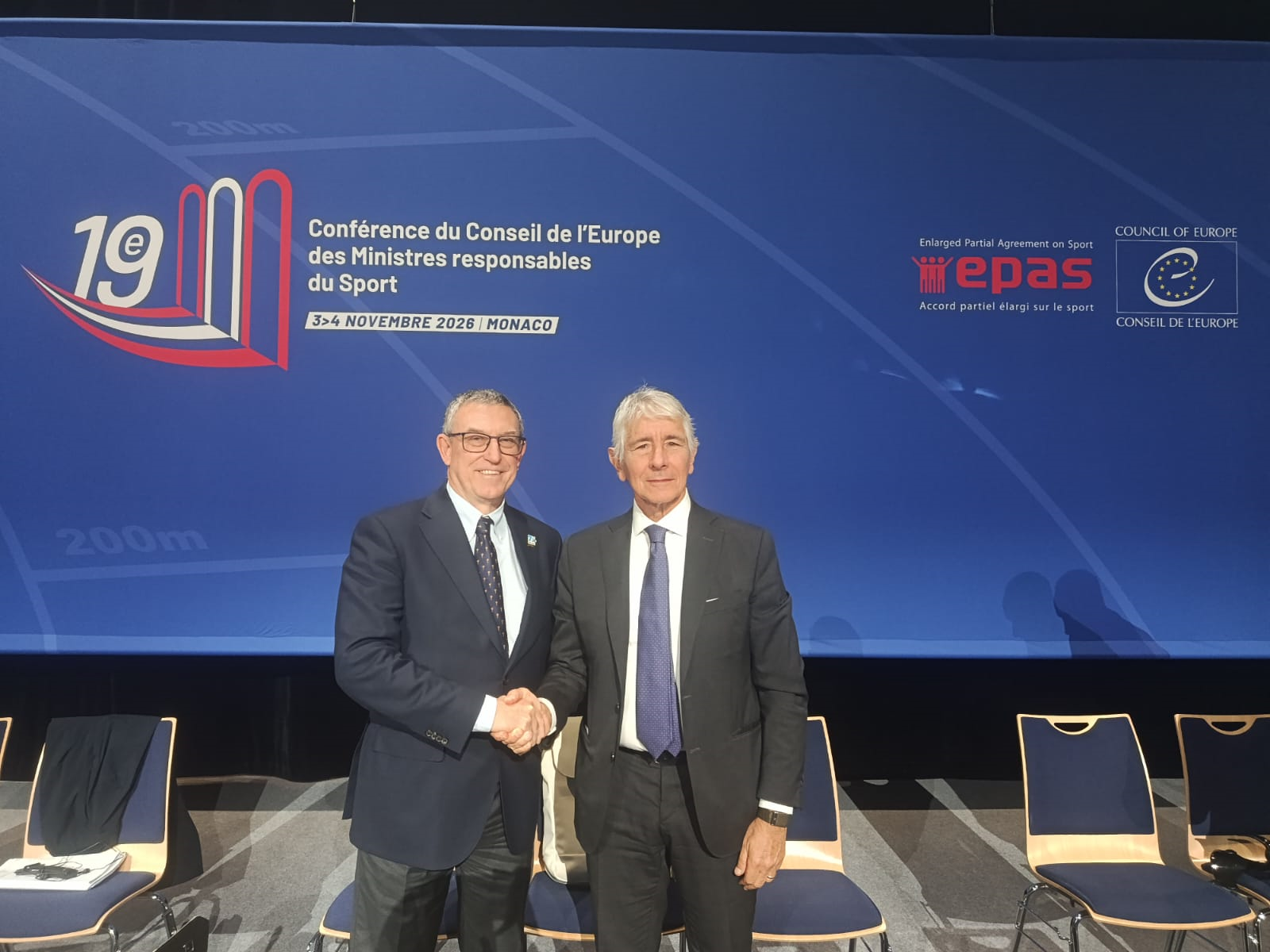
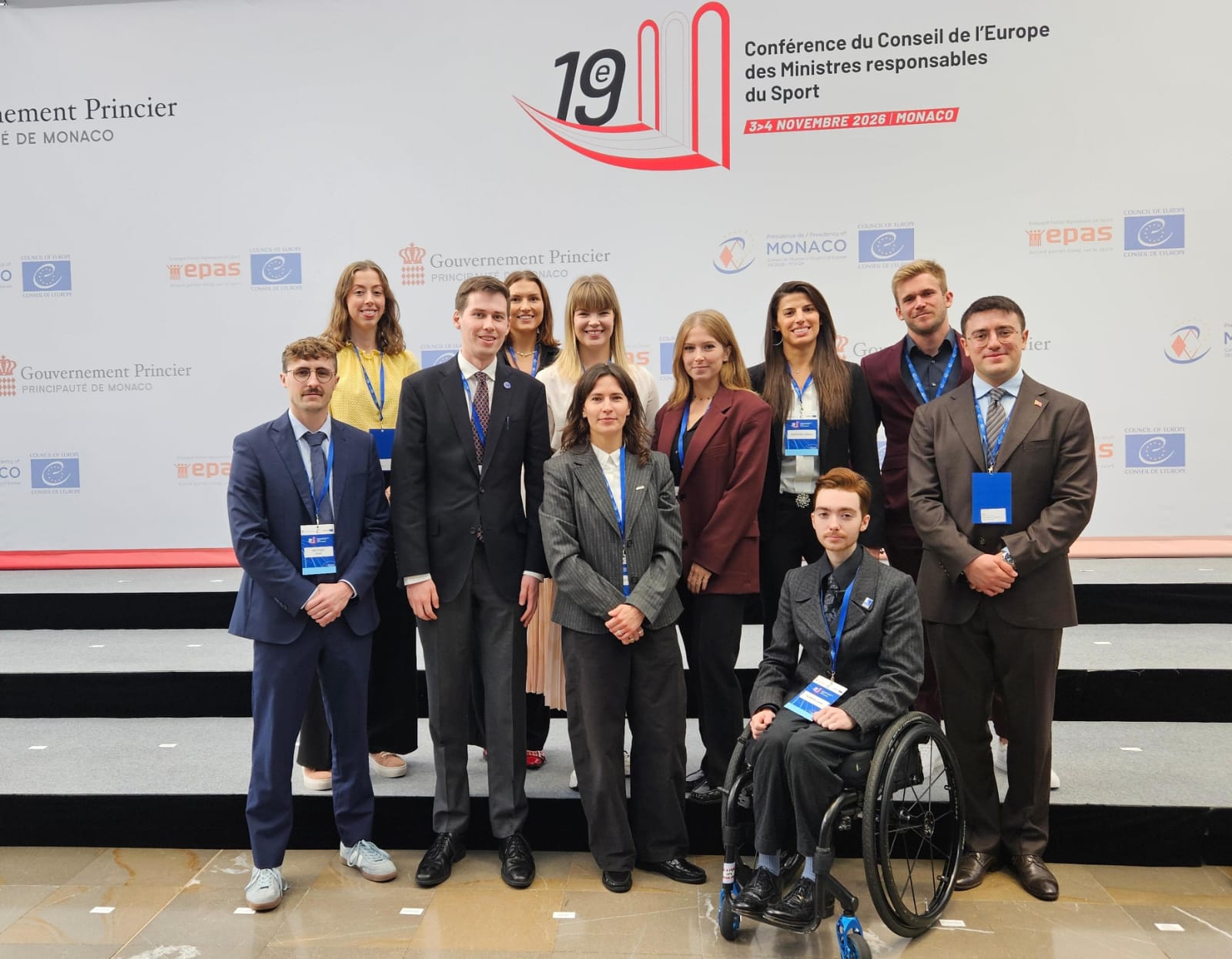
The protection of children, their wellbeing and their right to participate in sport in a safe and respectful environment were at the heart of the 19th Conference of Ministers responsible for Sport of the Council of Europe, held in Monaco on 3 and 4 November 2026, entitled “Safer and Healthier Sport for All Children”.
This international event brought together institutional representatives, experts and sports organisations to address two key priorities: preventing violence and abuse in sport, and promoting the physical and mental health of young people.
Panathlon International was represented by its International President, Giorgio Chinellato, and its youth delegate, Debora Quercioli, who attended both the EPAS Advisory Committee meeting and the Ministerial Conference.
During two speeches, International President Chinellato drew international attention to the phenomenon of hikikomori and social withdrawal amongst young people, emphasising how sport, when practised in a welcoming environment free from excessive pressure, can foster relationships, self-esteem and a sense of belonging.
He then outlined Panathlon International’s commitment in this area, ranging from the three-year agreement signed in 2025 with Hikikomori Italia ETS, through to the awareness-raising initiatives promoted by the Clubs and the round-table discussion organised at the European Parliament in Brussels in September 2026.
A second key theme was the role of collaboration between institutions and the sporting world in protecting young people. The President emphasised the importance of fostering links between schools, families, health services and sports associations, building on the experiences already developed by the Clubs: from initiatives against social withdrawal, bullying and cyberbullying, to safeguarding activities.
These experiences have given rise to the objective of building a European network of Clubs and organisations committed to preventing youth distress, to be progressively expanded at an international level. This is a process in which Panathlon International intends to act as a bridge between different areas of expertise and contexts, fostering the exchange of best practice and new partnerships.
Particular attention was also paid to the involvement of young people. The participation of the Panathlon delegate forms part of the process launched in Strasbourg last May, during which 49 young people from 32 countries drew up reflections and recommendations that were subsequently incorporated into the Conference’s proceedings. This approach aims to move beyond the mere symbolic presence of young people, recognising their right to have a say and contribute to decisions concerning their own future.
The discussion also highlighted the educational value of sport and the importance of drawing on past experiences to rethink approaches and models, moving beyond those that no longer meet the needs of the younger generations and fostering environments in which children and young people can grow, express themselves and freely develop their own identities.
For Panathlon International, participation in Munich also represented an important opportunity to strengthen relations with international institutions and organisations, forging new contacts and opportunities for dialogue that help raise awareness of the Movement and promote its values.
This commitment continues through the activities of the Clubs, educational projects and international partnerships, all with a shared goal: to make sport a place where every child can feel welcome, protected and free to be themselves.
© Stéphane DANNA / Direction de la Communication
The 2025 World Fair Play Awards ceremony took place on Sunday, 11 October 2026, at the Olympic Museum in Lausanne, Switzerland, celebrating outstanding examples of sportsmanship, integrity, respect and humanity. The event was a great success, bringing together the international Fair Play community to honour individuals who embody the true values of sport.
Filip Zubčić — Pierre de Coubertin World Fair Play Trophy
The Croatian alpine skier received this award for an exceptional act of fair play, recognising his honesty and integrity in competition, even when doing so may come at the cost of sporting success.
Reflecting on his decision, Filip explained that there was never any question about what he had to do:
“It was not a question. For me, that was the end of the story. The only thing I could do was to be honest. I would never accept a result knowing that I was cheating.”
Asia Hogan-Rochester — Jean Borotra World Fair Play Trophy
The Canadian rugby player was recognised for demonstrating the spirit of fair play throughout sporting competition, embodying respect, dignity and sportsmanship. Unfortunately, this outstanding athlete was unable to attend the ceremony in person, but kindly sent us a heartfelt video message to share with everyone.
Ufuk Timer — Willi Daume World Fair Play Trophy
The Turkish recipient was honoured for his dedication to promoting fair play and using sport as a means of inclusion, social responsibility and positive change.
Speaking about what drives his work, Ufuk shared a simple yet powerful message:
“My motivation is a better world for the children.”
Tim Van de Velde — CIFP / World Athletics Fair Play Award
The Belgian steeplechase athlete received this special joint award from the International Fair Play Committee and World Athletics, recognising an outstanding example of sportsmanship and solidarity in athletics.
Reflecting on his actions, Tim emphasised that helping others is a natural part of sport and of being human:
“I had to help. A little help never hurt anybody. It just felt so natural. Fair play is not something extraordinary; it is natural. It needs to be this way.”
Ilia Malinin — Milano Cortina 2026 Fair Play Award
The American figure skater, widely known as the “Quad God”, received this special award in recognition of the values of sportsmanship and the Olympic spirit demonstrated at the Milano Cortina 2026 Olympic Winter Games.
Speaking about the joy of seeing a friend achieve his dream, Ilia highlighted the importance of friendship and mutual support:
“It just made me so happy to see him achieve his dream and achieve his goals. I wanted to be a good friend, to support him and be there for him.”
Gábor Mihály — Special Honorary Diploma
A special Honorary Diploma was presented to Hungarian sculptor Gábor Mihály, creator of the Fair Play trophies. The recognition was particularly meaningful at the Olympic Museum, where his renowned sculpture Olympia – Three Cyclists is displayed, creating a special connection between his artistic work and the values of the Fair Play movement.
The ceremony concluded on a high note, celebrating the people who make sport a force for good. The International Fair Play Committee warmly congratulates all the award recipients and sincerely thanks everyone who attended and contributed to the success of this memorable occasion.
Photos: International Olympic Committee (IOC) Photo Picture Element
On 5 November, from 9.00 pm to 10.30 pm, at the Ginásio Clube Português, the session “YOUTH AND GOVERNANCE IN SPORT – From Recognition to Effective Participation” will take place, in collaboration with the Erasmus+ Sport project: YOULEAD – Leading the Game: Developing Pathways for Gender-Balanced Youth Leaders in Sports Governance, coordinated by Panathlon International, which will bring together diverse experiences and perspectives for an intergenerational debate on the obstacles, opportunities and pathways that could foster more meaningful participation by young people in the life and decision-making of sports organisations.
For the Panathlon Club Lisbon, this reflection is directly in line with its mission to promote ethics, integrity and sporting values. Good governance is not limited to compliance with rules and procedures: it also requires transparency, participation, representativeness and an organisational culture capable of recognising and valuing the contribution of different generations.
Rather than simply identifying the need to renew leadership, the aim is to reflect on the conditions that will enable us to train, engage and empower the younger generations, thereby contributing to a more participatory, ethical and sustainable approach to sports governance.
The session will be moderated by Ines Caetano, a former modern pentathlon athlete and founder of Sport Embassy.
New perspectives from research
The relationship between academic research and the world of sport was the focus of the webinar organised by Panathlon International’s Commission for Culture, Research and Education, dedicated to the themes of justice, public health and inclusion.
The event formed part of the collaboration with MAISI, the Erasmus Mundus international master’s programme in sports ethics and integrity, presented by Professor Silvia Camporesi. The programme involves five European universities and offers interdisciplinary training combining ethics, law, philosophy and sports management, preparing young professionals and researchers to tackle the challenges facing the sector.
The webinar featured two young researchers, who shared their reflections on practical aspects of inclusion in sport.
Claire Nowicki presented research on the participation of refugee women in sport in Europe, highlighting how the good intentions of organisations do not always translate into real opportunities. To make initiatives truly inclusive, it is necessary to consider practical and organisational barriers, but above all to listen to and involve the people for whom they are intended.
Giulia Sesa, meanwhile, examined the difficulties faced by athletes with type 1 diabetes in gaining access to military and civilian sports groups within the Italian state. Using the case of the athlete Anna Arnaudo, she highlighted how certain regulatory criteria can limit career opportunities even for athletes recognised as fit to practise sport.
These two distinct contributions drew attention to a common theme: the value of inclusion is also measured by the concrete choices, rules and opportunities offered by the sporting system.
The webinar thus provided new food for thought – including for clubs – on how ethical principles can be applied in the day-to-day practice of sport.
New webinars to promote ethics, integrity and inclusion in sport.
The work of Panathlon International’s Culture, Research and Education Commission continues, as it remains committed to promoting the values of sport through in-depth discussions, training initiatives and international collaboration projects.
The next event is scheduled for Thursday 29 October 2026, at 6.00 pm (CET) – 2.00 pm (BRASILIA), with a new webinar dedicated to the theme “Ethical reflections on justice, public health and inclusion in sport”, coordinated by Köle Gjeloshaj .
The session will draw on the research of Claire Nowick, a former student on the Erasmus Mundus Master’s programme in Ethics and Integrity in Sport (MAiSI), and Giulia Sesa, a PhD student in the Doctoral Training Network in Ethics and Integrity in Sport (DAiSI). The session will be presented by Professor Silvia Camporesi, lecturer in Integrity and Ethics in Sport at KU Leuven.
Access via the QR code or
https://bit.ly/webinarseries-pi
We invite you to share this and hope to see many of you there!
Paul Standaert represented Panathlon International at the 2026 kick off of EWOS. This year the event took place in Dublin, organized by the Irish Presidency of the EU.
On 23 September, Charlie McConalogue, Minister of State for Sport and Postal Policy, opened the Presidency Conference and welcomed delegates from leading sport organisations, sport federations, European networks and policymaking bodies. The programme combined plenary sessions on the role of traditional sports and games (TSGs) across Europe and on sport as cultural heritage with parallel thematic sessions.
The morning sessions took place under the theme "Pathways to Growth", with a focus on diversity and on social inclusion and disability. In the afternoontvwo further parallel sessions followed, on "Sport and Changing Demographics" and on "Sustainability and Sport: The Role of Traditional Sports and Games".
Georg Hausler, Director for Culture, Creativity and Sport at the European Commission (DG EAC), and Sarah Lynch, Deputy Head of Unit at DG EAC, presented the main findings of the newly published 2026 Eurobarometer on Sport and Physical Activity (https://europa.eu/eurobarometer/surveys/detail/3685).
During the discussions, Andrej Pisl of the EUSA Institute highlighted the European Citizens project "Give Sport a Say". The project empowers people and sporting communities by giving them a direct voice in decision-making and civic dialogue. Afterwards, participants visited Croke Park Stadium, watched a demonstration by the Irish Guild of Hurley Makers and were introduced to traditional Gaelic games.
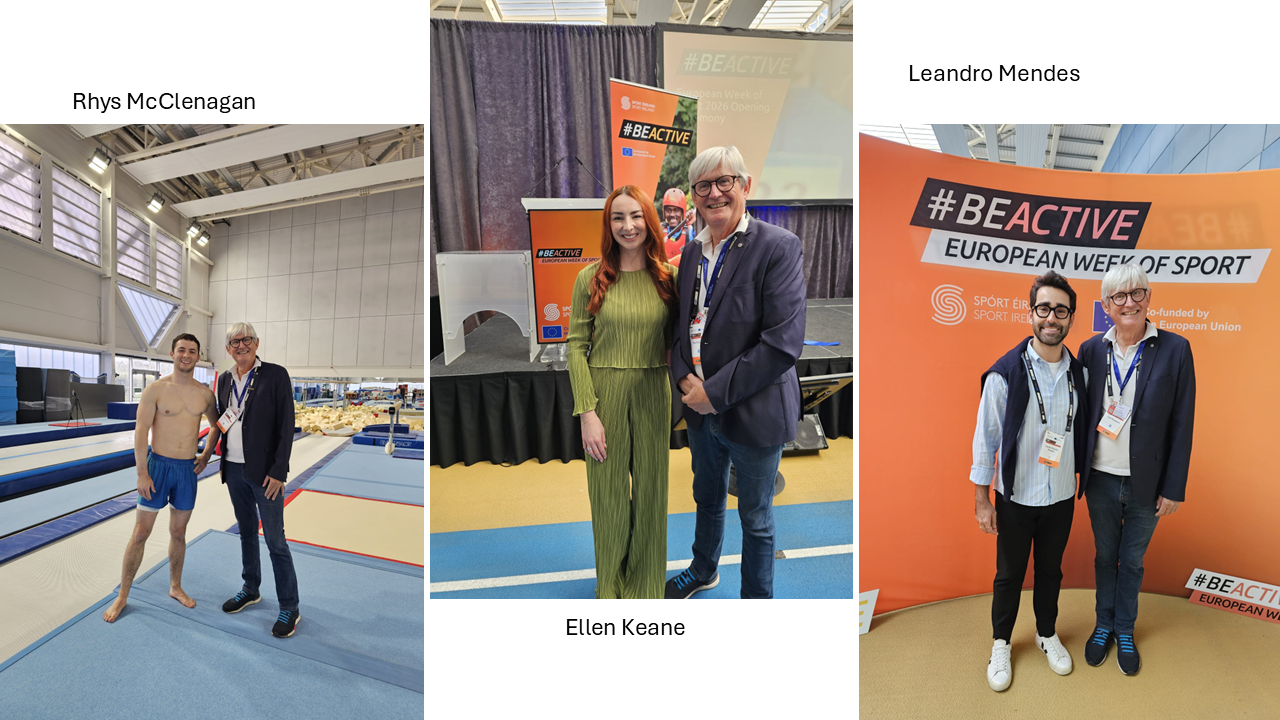
The following day marked the opening of the European Week of Sport (23–30 September). In keeping with the #BeActive initiatives, participants took part in para-sport activities before the formal launch ceremony, moderated by Paralympic athlete Ellen Keane.
Panathlon follow-up
Georg Hausler was keynote speaker at the Panathlon Congress in Ghent earlier this year. At this conference in Dublin, Paul Standaert spoke with him about possible Erasmus+ projects between Panathlon and European and non-European partners. The EU antenna in Brussels can further develop this approach as Paul has registered for Panathlon International at the Erasmus Plus Sport Event in Brussels on December 18th.
Paul also met 2024 Olympic pommel horse gold medallist Rhys McClenagan (at his training session), as well as Paralympic gold medallist Ellen Keane who was the master of ceremony at the official start of EWOS.
Finally, contact was made with Leandro Mendes of European Lotteries to discuss possible collaboration with Panathlon International.
On 7 October 2026, we held a coordination meeting to prepare the upcoming YOULEAD – Leading the Game Transnational Project Meeting in Seville.
Together with our Spanish hosting partner, we reviewed the logistics, programme and key activities for the meeting, which will bring the YOULEAD partners together to advance our work on gender-balanced youth leadership in sports governance.
The preparations are progressing well, with the Info Pack and programme now being finalised. We look forward to meeting again in Seville and continuing to move YOULEAD forward!
#YOULEAD #LeadingTheGame #ErasmusPlus #Sport #YouthLeadership #SportsGovernance #GenderEquality
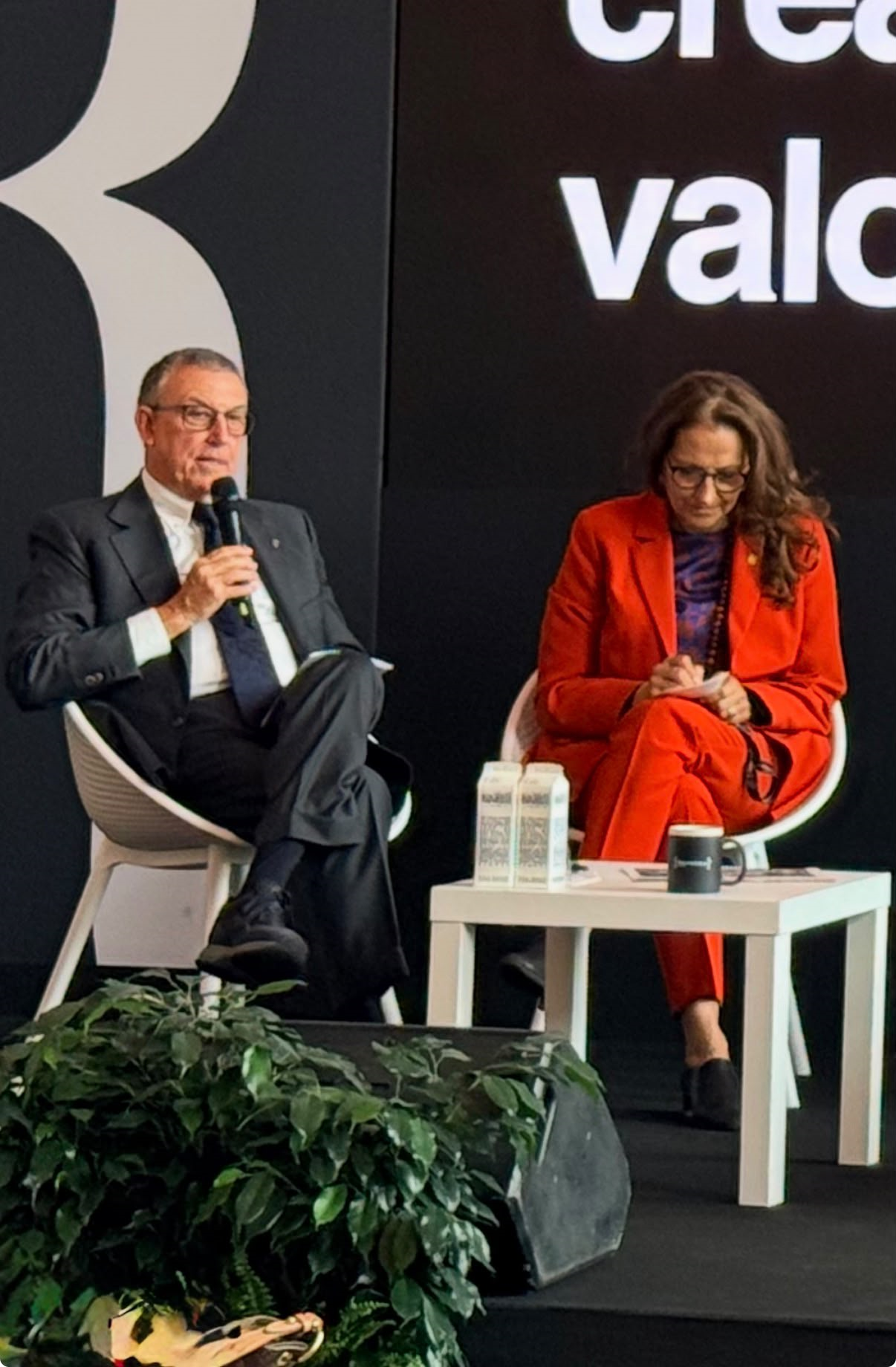
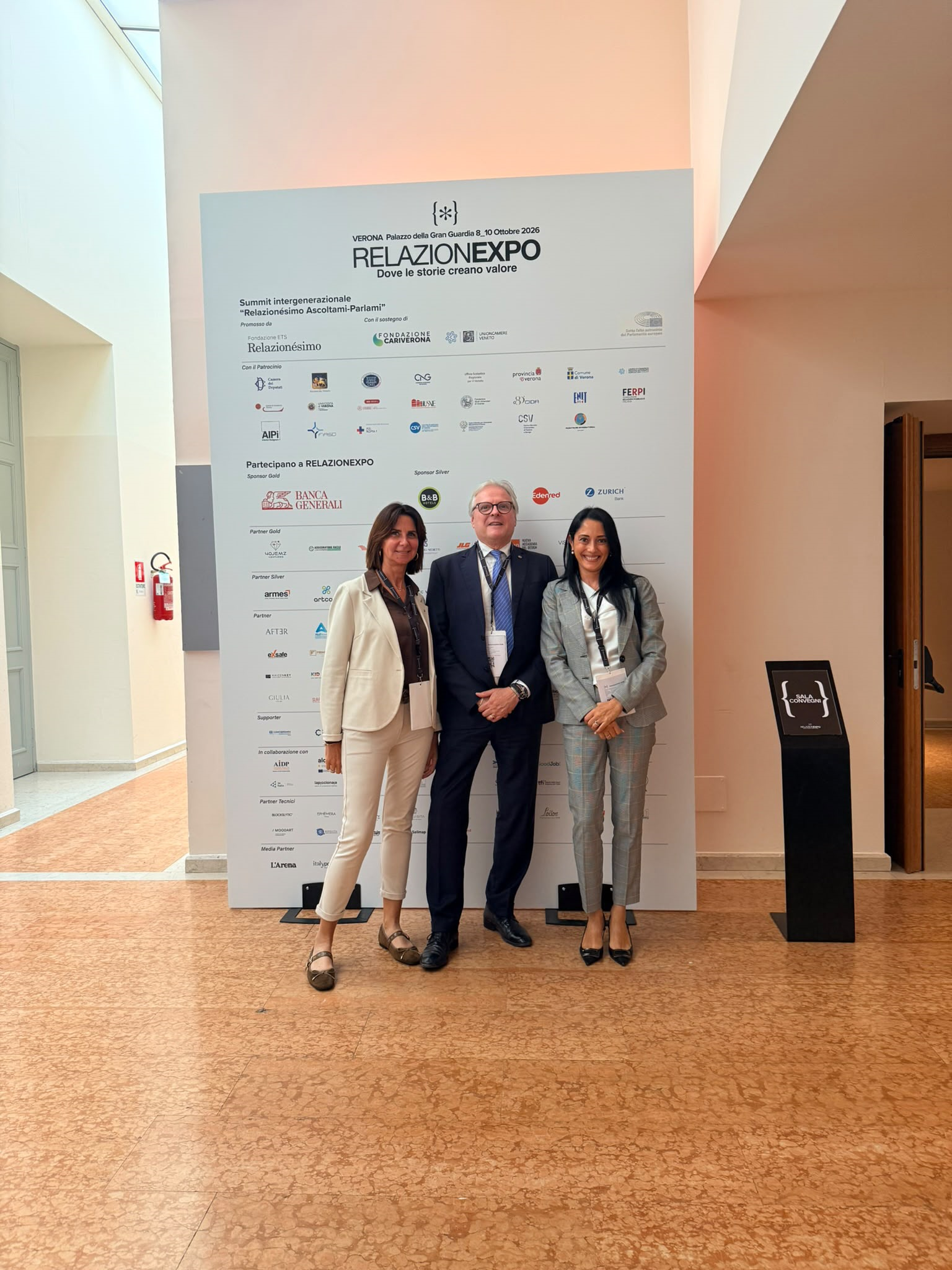
In the prestigious setting of the Palazzo della Gran Guardia in Verona, as part of RelazionExpo, the conference “Sport that Builds Relationships” took place, dedicated to the role of sport as a tool for inclusion, personal growth, wellbeing and the development of human relationships.
The event provided an important opportunity to explore highly topical issues, confirming the tangible contribution of sporting activity to building positive bonds, strengthening a sense of belonging and promoting a culture based on respect, participation and solidarity.
The proceedings were opened by the International President of Panathlon International, Giorgio Chinellato, who highlighted the ethical principles and values underpinning the Panathlon movement and the role of sport as a universal language, capable of fostering dialogue, integration and community growth.
This was followed by contributions from International Board Member Fabiano Gerevini, who reflected on the importance of the relationships that are formed and strengthened through sporting activity; psychologist Federica Perolini, on the psychological aspects linked to interpersonal relationships; Emanuela Schiavini, on the relationship between health, wellbeing and sporting activity; journalist Giovanna Pastega, on the role of communication in conveying the values of sport; and Paralympic champion Sandra Truccolo, who gave a particularly moving account of the inclusive value of sport and its ability to transform difficulties into opportunities for personal and collective growth.
During the conference, various aspects relating to the educational and social dimensions of sport were explored in depth: from the promotion of authentic relationships and emotional skills to the contribution made to preventing distress, safeguarding mental and physical wellbeing, and building positive social networks.
Particular attention was paid to the ‘Seconda Chance’ project, presented by Giovanna Pastega and Sandra Truccolo, which aims to promote sporting activities within prisons as an opportunity for social rehabilitation, personal growth and reintegration. The project involves both prisoners and prison service staff, highlighting the value of sport as a tool for dialogue, mutual respect and the creation of new perspectives, even in the most complex contexts.
Considerable attention was also given to the phenomenon of Hikikomori and Panathlon International’s commitment to raising awareness of this growing social crisis. The speakers emphasised the role of sport as a practical resource for preventing isolation, boosting self-esteem, encouraging socialisation and contributing to pathways of inclusion and the restoration of relationships, in collaboration with families, schools, health professionals, educators and sports organisations.
A strong and shared message emerged from the speakers’ discussions: sport is not merely about competition or the pursuit of performance, but a true training ground for life, capable of fostering trust, genuine relationships, a sense of responsibility and new opportunities for individuals and communities.
The conference reaffirmed Panathlon International’s commitment to promoting a sporting culture based on ethics, inclusion and the empowerment of the individual, so that sport may continue to be a genuine driving force for human and social growth.