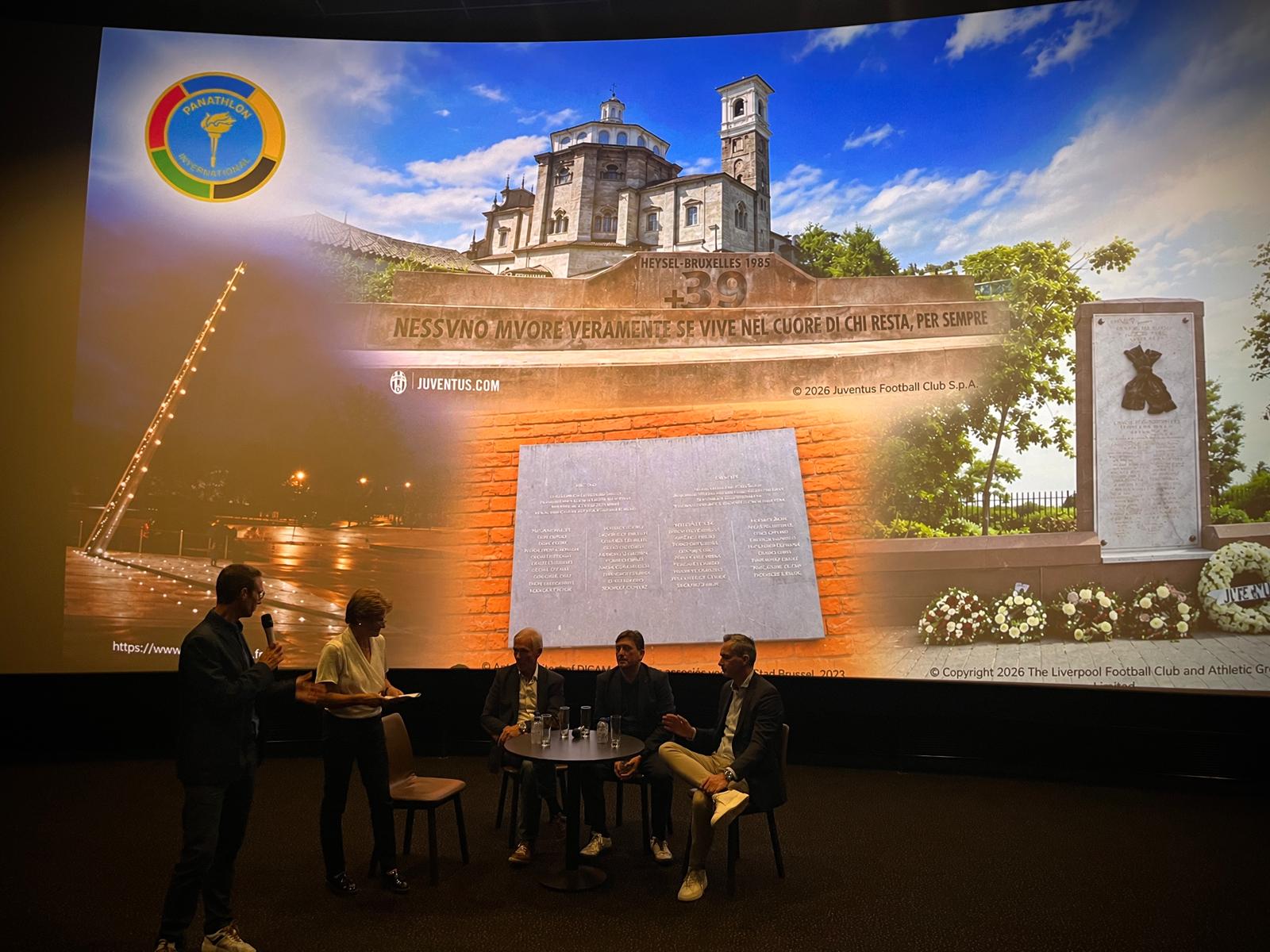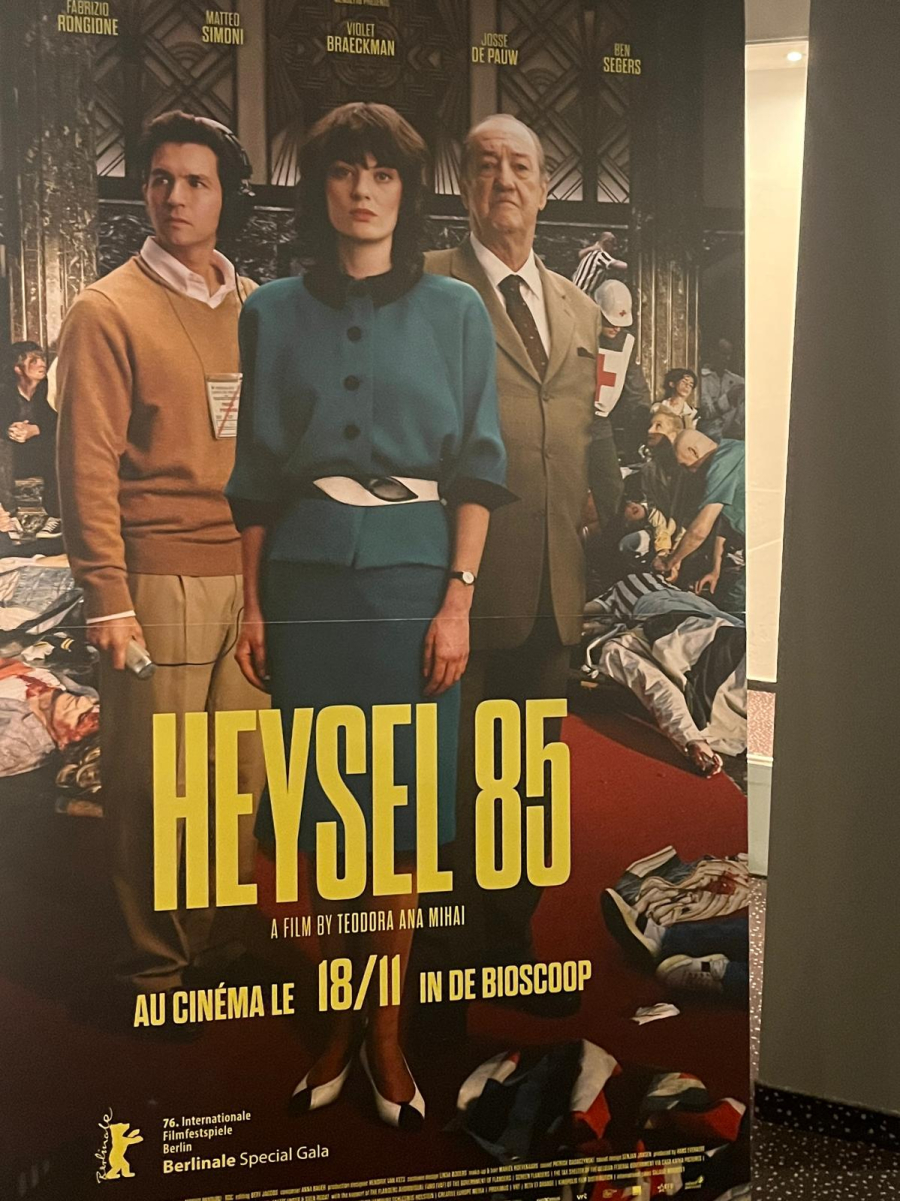
On October 6, Panathlon Vlaanderen organized a debate on the aftermath of the 1985 Heysel disaster. The occasion was the premiere screening of the film Heyzel 85, in which director Teodora Ana Mihai reconstructs the disaster of May 29, 1985, where 39 people lost their lives.
The film stays away from the pitch and focuses on what happens behind the scenes—concentrating heavily on the outrage over chaotic preparations, a slow response, and an irresponsible power play. The main fictional characters are Marie, daughter and press spokesperson for the Mayor of Brussels, and Luca Rossi, a journalist. They are torn between their professional duty, family bonds, and the human tragedies unfolding before their eyes.
The organizers surrounding the final seem to view the stadium and ticket distribution as a purely logistical task. According to their logic, safety becomes a police matter rather than an organizational responsibility. The security forces, in turn, point to unclear orders and a lack of leadership. The unfortunate result is a situation where no one has a complete overview, yet no one dares to take control either. Local politics, embodied by the mayor, hides behind communication strategies and image management. The federal government keeps its distance, as if a major stadium in the capital were not a top priority. The outcome is a chain reaction where every link can shift blame to the next.
The film demonstrates that a disaster rarely has just one person to blame, but rather many people who fail to take responsibility. This makes its critique timeless, serving as a mirror for contemporary football politics. No matter how many well-intentioned measures clubs adopt today, the pattern remains. After Heysel, new laws and stadium bans were introduced, but the reflex remained purely reactive—action only follows an incident.
With every serious riot, the debate among clubs, cities, police, and responsible ministers repeats itself over who pays for what and who decides. Clubs, often severely limited in their scope of action, point to the police, cities point to the clubs, and higher government points to the cities. As a result, high-risk, high-cost matches become a dispute over expenses rather than a discussion about prevention. Stadium infrastructure also remains a political issue where decisions drag on for years, with Belgian building permit policies certainly sharing part of the blame.
The strongest point of the film is that the viewer sees the people who suffer the consequences: supporters, rescue workers, and family members. They have zero influence over the organizational structures that put them at risk.
Heysel 85 therefore advocates for a clear authority with ultimate responsibility and treats safety as a non-negotiable prerequisite, not a delayed reaction. Panathlon Flanders can only help spread this message—because every sports enthusiast has the right to a safe environment and a safe sporting experience.